


You pull out of a parking space, turn the wheel, and suddenly it feels like you’re steering a much older car with no power assist. Maybe the wheel is only stiff at low speed. Maybe it gets easier once you’re moving. Or perhaps it became heavy almost overnight.
If you’re asking, “why is my steering wheel hard to turn?”, the problem can come from several places. Low power steering fluid is a common cause on hydraulic systems. A worn power steering pump, slipping drive belt, steering rack problem, underinflated tires, binding suspension parts, or a fault in an electric power steering system can also make the wheel difficult to move.
And there is an important distinction right away: not every car has power steering fluid.
Many newer vehicles have electric power steering, usually called EPS. There may be no hydraulic pump, reservoir, or steering fluid at all. Instead, an electric motor provides steering assistance.
That changes the diagnostic path quite a bit.
A steering wheel that suddenly becomes very hard to turn while driving deserves prompt attention. You may still have mechanical steering control, but turning can require much more effort, especially at low speed. If the change is sudden or a steering warning appears, find a safe place to stop and have the vehicle checked.
What Normal Power Steering Should Feel Like
Modern steering should feel fairly light when parking and slightly firmer as speed increases.
You should not need to pull hard with both arms simply to turn into a parking space. The steering also should not feel sticky, notchy, or like it catches at certain points.
Some cars naturally have heavier steering than others. A sporty sedan may deliberately feel firmer than a compact crossover. Large wheels and wide tires can also change steering effort.
But if your car suddenly feels different from how it normally feels, that change matters.
The steering system is telling you something.
First Question: Hydraulic or Electric Power Steering?
This is the easiest way to narrow things down.
Hydraulic power steering relies on pressurized fluid. An engine-driven pump sends hydraulic pressure to the steering gear, reducing the effort needed at the wheel.
Electric power steering works differently. An electric motor assists the steering column or rack, while sensors and control modules decide how much assistance to provide.
| System Type | How Assistance Is Created | Common Causes of Heavy Steering |
|---|---|---|
| Hydraulic power steering | Hydraulic pump and fluid pressure | Low fluid, leaks, bad pump, slipping belt, rack problems |
| Electro-hydraulic steering | Electric motor drives a hydraulic pump | Low fluid, electric pump fault, wiring issue, control fault |
| Electric power steering | Electric motor assists steering | Motor, sensor, module, wiring, voltage, or mechanical steering fault |
| Manual steering | No power assistance | Tire, suspension, alignment, or steering-gear problems |
If you do not know which system your car has, the owner’s manual is a good place to check. Looking for a power steering reservoir under the hood may also help, but remember that reservoir layouts vary.
Low Power Steering Fluid
On a hydraulic steering system, low fluid is one of the first things worth checking.
Power steering fluid transfers hydraulic pressure from the pump to the steering gear. If the level falls too low, the system may not provide enough assistance.
The steering often becomes especially heavy while parking or turning at low speed.
You may also hear whining or groaning as you turn the wheel.
But power steering fluid normally does not disappear for no reason.
If the level is low, there may be a leak.
Possible leak points include hoses, seals, the pump, the steering rack, connections, and the fluid reservoir itself.
Adding fluid may temporarily improve the steering, but it does not repair the source of the leak.
Signs You May Have a Power Steering Fluid Leak
- The steering becomes heavier over several days or weeks.
- You hear whining while turning.
- The power steering reservoir is below its normal level.
- You see oily fluid under the front of the car.
- Hoses or the steering rack look wet.
- Steering assistance changes from one drive to the next.
- The wheel is hardest to turn during parking maneuvers.
Fluid color varies by vehicle. Some systems take dedicated power steering fluid, while others specify a particular automatic transmission fluid or another hydraulic fluid.
Do not simply pour in whatever bottle says “power steering” on the front.
The correct specification matters.
A Failing Power Steering Pump
If the fluid level is correct but the steering is still heavy, the hydraulic pump may not be producing enough pressure.
A worn pump often gives you a clue before it fails completely.
You may hear a whining noise that changes with engine speed or becomes louder as you turn.
Steering may feel almost normal while cruising but become frustratingly heavy when you slow down and try to park.
That makes sense because parking requires more steering assistance than small corrections at highway speed.
A pump can fail because of internal wear, contamination, low fluid operation, or another problem in the system.
Replacing the pump without checking why it failed can sometimes lead to another repair later.
The Serpentine Belt May Be Slipping
On many hydraulic systems, the power steering pump is driven by the engine through a belt.
If that belt is loose, damaged, contaminated, or slipping, the pump may not turn properly.
You could notice stiff steering along with squealing from the engine bay.
Depending on vehicle design, the same belt may also drive the alternator, water pump, or air-conditioning compressor.
That means a belt problem can create more than steering trouble.
If you suddenly get heavy steering plus a battery warning or rising engine temperature, stop driving as soon as it is safe. A failed drive belt can affect several critical systems at once.
Electric Power Steering Can Fail Too
Electric power steering removes the hydraulic pump and fluid from the equation, but it still has components that can fail.
An EPS setup normally includes an electric assist motor, control electronics, torque or position sensors, wiring, and mechanical steering components.
If assistance disappears, the steering can become dramatically heavier.
You might see a steering-wheel warning symbol on the dashboard. Some cars display a written steering-system message.
The problem may be related to:
- An electric steering motor fault
- A steering torque sensor problem
- A steering angle or position sensor fault
- Damaged wiring or connectors
- A control module problem
- Low system voltage
- A charging-system problem
- A mechanical bind inside the steering rack or column
Restarting the vehicle may occasionally restore assistance after a temporary electronic fault, but that does not mean the underlying problem should be ignored.
If the warning comes back, the system needs diagnosis.
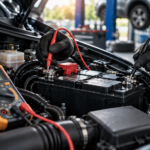
Can a Weak Battery Make the Steering Hard?
On vehicles with electric power steering, yes, electrical-system voltage can matter.
The steering motor can draw substantial current, particularly while turning the wheel at low speeds.
If battery voltage is unusually low or the charging system is not functioning correctly, EPS assistance may be reduced or disabled.
You may notice other clues at the same time: slow engine cranking, dim lights, battery warnings, multiple dashboard messages, or electronic systems behaving strangely.
But do not assume a battery is the problem simply because the car has EPS.
The steering system itself may have a fault.
Low Tire Pressure Can Make Steering Feel Heavy
This one is easy to overlook.
Your tires are the only parts of the car touching the road. If the front tires are badly underinflated, their contact patches become larger and steering resistance increases.
You may notice the difference most while parking.
The car might also pull to one side if one front tire is significantly lower than the other.
Check tire pressure when the tires are cold and compare the readings with the vehicle manufacturer’s recommended pressures, usually shown on the driver’s door-jamb label.
Do not automatically inflate tires to the maximum pressure printed on the tire sidewall. That number is not the normal recommended pressure for your specific car.
Could Wheel Alignment Cause Heavy Steering?
Alignment problems can change how steering feels, though they are not usually the first explanation for a wheel that suddenly becomes extremely difficult to turn.
Incorrect caster, toe, or other geometry can make the steering feel strange and affect how well the wheel returns toward center.
Alignment may become a concern after hitting a pothole, curb, or road debris, especially if the car now pulls or the steering wheel sits crooked while driving straight.
But alignment settings can also be a symptom of worn or bent parts.
If something in the suspension has shifted, simply adjusting alignment may not solve the real problem.
Binding Ball Joints or Tie Rod Ends
Not every hard-steering problem comes from the power assist system.
The steering and suspension have mechanical joints that need to move freely.
Ball joints, tie rod ends, steering knuckles, and other pivot points can wear, corrode, or begin to bind.
A severely binding joint can make steering feel heavy even when the power steering system itself is working.
You may also hear creaking, popping, or clunking.
This deserves attention because steering and suspension joints are safety-related components.
Strut Mounts Can Make the Wheel Feel Sticky
Many front-wheel-drive cars and crossovers have MacPherson strut front suspension.
The upper strut mount may include a bearing that allows the strut assembly to rotate as you steer.
If that bearing begins sticking, steering can feel notchy or resistant.
You might turn the wheel and feel tension build, followed by a small jump as the suspension finally moves.
Sometimes you hear a spring-like popping sound.
This can easily be mistaken for a power steering problem because the wheel itself feels heavy.
A Steering Rack Problem
The steering rack converts steering-wheel movement into the side-to-side movement that turns the front wheels.
If the rack develops internal hydraulic problems, seal issues, mechanical wear, or binding, steering effort can rise.
One clue is uneven assistance.
The wheel might turn relatively easily to the left but feel much heavier to the right.
Or assistance may come and go as you rotate the wheel.
Hydraulic racks can also leak fluid from seals near the rack boots.
Electric racks add another layer because the assist motor and electronics may be integrated into the rack assembly.
Why Is the Steering Wheel Hard to Turn Only at Low Speed?
This pattern often points toward a loss or reduction of power assistance.
At parking speed, the tires must scrub across the pavement as they change direction, so steering requires much more force.
Once the car is moving, the tires roll as they turn, and steering naturally becomes easier.
Possible causes include a weak hydraulic pump, low fluid, slipping belt, EPS problem, or low tire pressure.
If steering becomes nearly normal above 20 or 30 mph but feels extremely heavy in parking lots, the assistance system deserves close attention.
Why Is the Steering Hard Only When the Engine Is Cold?
Cold temperatures can make hydraulic fluid thicker.
A worn pump or restricted system may struggle more when the fluid is cold, then improve after several minutes of driving.
A belt may also behave differently when cold.
You might hear a brief squeal during the first few turns of the wheel.
But steering should not remain dangerously stiff every cold morning.
If the pattern keeps happening, have the system inspected rather than accepting it as normal winter behavior.
Why Does It Get Harder When I Turn in One Direction?
Uneven steering effort is a useful diagnostic clue.
If turning left feels fine but turning right is noticeably harder, the problem may involve the steering rack, hydraulic pressure distribution, a mechanical joint, suspension component, or another directional load in the steering system.
This pattern is less consistent with something simple like both front tires being equally underinflated.
A technician can compare steering effort in each direction while inspecting the rack and suspension.
What If the Steering Wheel Is Hard to Turn After Hitting a Pothole?
A serious pothole impact can do more than knock the alignment out.
It can bend a tie rod, damage a wheel, disturb suspension geometry, damage a tire, or affect another steering component.
If the steering changed immediately after an impact, do not assume it just needs an alignment.
Check for visible wheel and tire damage, and have the steering and suspension inspected.
A bent or damaged part needs repair before alignment numbers mean much.
What the Symptoms Can Tell You
| What You Notice | Possible Causes | What to Check First |
|---|---|---|
| Hard steering with whining | Low fluid, leak, pump problem | Fluid level and leaks on hydraulic systems |
| Hard steering with squealing | Drive belt slipping | Belt condition and related accessories |
| Hard steering plus EPS warning | Electric steering fault | Diagnostic scan and electrical system |
| Hard steering after battery trouble | Low voltage or EPS fault | Battery and charging-system condition |
| Hard steering after a pothole | Bent steering or suspension part | Physical inspection |
| Heavy only during parking | Reduced power assist or low tire pressure | Tire pressure and steering assistance |
| Harder in one direction | Rack or mechanical binding | Steering rack and suspension inspection |
| Sticky or notchy steering | Strut mount, column joint, rack, steering mechanism | Mechanical steering inspection |
Can a Steering Column Joint Cause Heavy Steering?
Yes, and it is sometimes missed.
The steering shaft between the steering wheel and steering gear often contains universal joints or couplings. These allow the shaft to work through different angles.
Corrosion or wear can make a joint bind.
The steering may feel stiff at certain points in its rotation, almost as if the wheel alternates between normal and heavy.
You may not hear the classic hydraulic pump whine because the power assist system itself is not the source.
This is another reason diagnosis should include mechanical steering components rather than focusing only on fluid and pumps.
Can Brakes Make Steering Feel Hard?
A sticking front brake normally causes pulling, heat, odor, or sluggish acceleration rather than making the steering wheel physically difficult to rotate.
Still, a badly dragging brake can change how the car behaves and make the steering feel unusual.
If one front wheel is much hotter than the other after driving, that deserves inspection.
Do not touch a brake rotor directly after driving. It can be hot enough to cause burns.
What Can You Safely Check at Home?
You do not need to dismantle the steering rack to gather useful information.
A few simple observations can make the repair shop’s job easier.
- Check the front tire pressures.
- Notice whether steering is harder left, right, or both ways.
- Listen for whining, squealing, clicking, popping, or creaking.
- Look underneath the parked car for fresh fluid.
- If the vehicle has hydraulic steering, check the fluid level according to the owner’s manual.
- Look for a steering or battery warning on the dashboard.
- Notice whether the problem changes with engine speed.
- Pay attention to whether steering improves once the car starts moving.
- Think about whether the problem began after a pothole, curb impact, battery issue, or recent repair.
That information can dramatically narrow the search.
Should You Keep Driving With Heavy Steering?
It depends on how severe the problem is and why it is happening.
A mildly heavy wheel caused by slightly low tire pressure is very different from sudden loss of electric power steering on the highway.
If steering suddenly becomes extremely heavy while driving, keep firm control of the wheel, reduce speed smoothly, avoid abrupt maneuvers, and move to a safe stopping place.
If a drive belt has failed, you may also lose alternator output or engine cooling on some vehicles, making continued driving risky.
A major fluid leak, severe steering warning, grinding noise, binding wheel, or visible steering-component damage also deserves immediate attention.
Can You Still Steer If Power Steering Fails?
On many vehicles, a mechanical connection remains between the steering wheel and front wheels even if power assistance fails.
So the car may still steer.
But “still steerable” does not mean easy to drive.
At low speed, the wheel can become extremely heavy. Emergency maneuvers may require far more effort than expected.
That is why a total loss of assistance should not be treated as a minor comfort issue.
Could a Recent Repair Have Caused It?
If steering became heavy immediately after another repair, mention that timing to the shop.
Maybe the battery was disconnected and an EPS calibration or fault occurred. Maybe suspension parts were replaced. Perhaps a hose was disturbed or a belt was removed during other engine work.
It does not automatically mean someone made a mistake.
But timing is useful diagnostic information.
Power Steering Fluid Doesn’t Last Forever
Hydraulic steering fluid works under pressure and heat. Over time, it can darken and pick up contamination.
Some manufacturers specify service intervals, while others do not list routine replacement.
Follow the maintenance guidance for your particular vehicle rather than assuming every power steering system needs flushing at the same mileage.
And remember: changing old fluid will not repair a worn rack or failing pump.
Maintenance and repair are two different things.
Do Not Hold the Steering Against Full Lock
On many hydraulic systems, holding the steering wheel firmly against its maximum left or right stop places heavy load on the power steering system.
You may hear the pump change tone.
There is usually no reason to keep forcing the wheel once it reaches the stop.
When parking, ease the wheel slightly away from full lock rather than holding it there under pressure.
Why Wider Tires Can Make Steering Feel Heavier
If the steering became heavier after installing wider wheels or tires, the change may be related to the new setup.
Wider tires can increase the amount of rubber contacting the pavement. Different wheel offset can also change steering geometry and the forces reaching the steering system.
A modest change may simply alter steering feel.
An extreme wheel or tire setup can create additional stress and handling issues.
If steering changed immediately after new wheels went on, include that detail when the car is inspected.
Why the Steering Wheel May Not Return to Center
Normally, after turning a corner, the steering wheel should naturally move back toward its centered position as the car straightens.
If it stays stuck or returns very slowly, possible causes include alignment problems, binding suspension joints, strut mount problems, steering rack issues, or steering column resistance.
This is a different clue from simple heaviness.
A wheel that feels both heavy and reluctant to return deserves a mechanical inspection.
How a Shop Diagnoses Heavy Steering
A useful diagnosis starts by reproducing the symptom.
The technician may check steering effort with the vehicle stationary and moving, listen for pump noise, inspect tires, look for leaks, and check steering and suspension joints.
On hydraulic systems, fluid condition, pump operation, belt condition, and hydraulic pressure may be evaluated.
On EPS-equipped cars, a diagnostic scan becomes more important.
The steering module may store trouble codes even when the warning light is no longer on.
Electrical voltage, motor operation, sensor signals, and steering calibration can then be checked.
If assistance appears normal, the technician may look deeper into the mechanical side: rack movement, tie rods, ball joints, upper strut bearings, steering shaft joints, and related parts.
How Expensive Is Hard Steering to Fix?
The range is huge because “hard steering” is a symptom, not one specific repair.
Inflating a low tire costs almost nothing.
Repairing a leaking hose may be relatively straightforward.
Replacing a hydraulic pump can cost substantially more.
An integrated electric steering rack on a modern car can become a major repair.
The same symptom can therefore lead to very different bills.
That is another reason diagnosis matters before ordering parts.
Don’t Replace the Power Steering Pump on a Guess
The steering is heavy. The pump makes some noise. Easy answer: replace the pump.
Maybe.
But first check the fluid level, leaks, belt, steering rack, and whether the pump is actually producing inadequate pressure.
A pump can sound unhappy because it is sucking air through low fluid. Replacing it without repairing the leak does not solve much.
And on a car with EPS, there may not even be a traditional pump to replace.
Know the system before buying parts.
When Heavy Steering Needs Immediate Attention
Some situations are more urgent than others.
Stop driving or arrange prompt inspection if the steering suddenly becomes extremely difficult, the vehicle no longer tracks normally, or you suspect physical steering damage.
A warning light combined with severe loss of assistance also deserves attention.
And if you hear grinding or feel the steering physically jam, do not keep forcing the wheel.
Steering is not an area where “I’ll see what happens next week” is always a good plan.
FAQ
Why is my steering wheel hard to turn at low speed?
Low-speed steering requires the most assistance. Low hydraulic fluid, a weak power steering pump, an EPS fault, low tire pressure, or mechanical steering resistance can make parking especially difficult.
Can low power steering fluid make the wheel hard to turn?
Yes, on vehicles with hydraulic power steering. Low fluid can reduce hydraulic assistance and may also cause whining. If the fluid is low, check for leaks rather than simply topping it up repeatedly.
Why is my steering wheel suddenly hard to turn?
Sudden heavy steering can come from power steering failure, a broken or slipping drive belt, an EPS electrical fault, a major fluid leak, or mechanical steering damage. A sudden change should be inspected promptly.
Can low tire pressure cause stiff steering?
Yes. Severely underinflated front tires increase resistance when turning, especially while parking. Check cold tire pressures against the recommendation on the vehicle’s door-jamb label.
Can a bad battery cause power steering problems?
It can on some vehicles with electric power steering. Low system voltage may reduce or disable steering assistance, though the EPS system itself may also have a fault.
Why is my steering harder in one direction?
Uneven effort can point toward a steering rack problem, hydraulic issue, binding suspension part, steering-column joint, or another mechanical fault. It is worth having the system inspected.
Is it safe to drive when the steering wheel is hard to turn?
Mild heaviness has many causes, but sudden or severe loss of steering assistance can make the vehicle difficult to control. If steering becomes dramatically harder while driving, slow down carefully and stop somewhere safe.
Conclusion
If your steering wheel is hard to turn, start with one basic question: did the steering change suddenly, or has it gradually become heavier?
A sudden change tends to deserve faster attention.
On a hydraulic steering system, low power steering fluid, leaks, a weak pump, or a drive belt problem are common possibilities.
On an electric system, the problem may involve the assist motor, sensors, wiring, steering control module, low electrical voltage, or a mechanical bind.
And sometimes the steering-assist system is not the problem at all.
Low tire pressure can make parking surprisingly difficult. A binding ball joint, worn strut bearing, damaged tie rod, steering-column joint, or steering rack can create resistance that feels a lot like failed power steering.
Pay attention to the details.
Does the steering whine?
Does it squeal?
Is it worse only when parking?
Does it become easier when the engine speed rises?
Is one direction harder than the other?
Did it start after hitting a pothole?
Did a steering warning appear?
Those clues matter because “hard steering” covers many different faults.
You can make a few basic checks yourself. Verify tire pressure. Look for fresh fluid under the front of the vehicle. If the car has hydraulic power steering, check the reservoir according to the owner’s manual. Watch the dashboard for warning lights and listen carefully while turning.
But do not keep forcing a steering wheel that feels like it is physically binding.
And do not assume adding fluid is a repair if the reservoir keeps getting low.
Fluid has to be going somewhere.
The same principle applies to electric steering. If assistance disappears and then returns after restarting the car, the temporary recovery does not necessarily mean the problem is gone.
A stored steering-system trouble code may still point toward the cause.
There is also no universal repair price.
The answer may be as simple as correcting tire pressure. It may involve a leaking hose or belt. Or it could require a steering rack or electronic steering component.
Diagnosis saves money because it prevents the classic parts-cannon approach: replace the pump, then the rack, then something else until the steering finally improves.
One more thing matters here: steering is a safety system.
If the wheel simply feels a little heavier than it did last year, schedule an inspection and find out why.
If it suddenly becomes very hard to turn while you’re driving, treat that differently. Keep control, reduce speed smoothly, avoid abrupt steering input, and get somewhere safe.
You may still be able to turn the wheels without power assistance, but the amount of force required can be dramatically higher than you’re used to.
So when you find yourself asking why is my steering wheel hard to turn, don’t focus only on the steering wheel itself.
Think of the whole chain: tires, suspension joints, steering column, steering rack, power assistance, electrical supply, and – on hydraulic systems – pump, fluid, hoses, and drive belt.
Some causes are minor.
Some are not.
The way the problem started, the noises that come with it, and the conditions that make it worse can usually point you in the right direction.
And once you know the real cause, the fix becomes much less mysterious.




Leave a Reply